The State of Recording Compliance Across City and County Offices
Recording compliance gaps are growing fast in government offices. Learn which laws apply and how to build a defensible policy today.
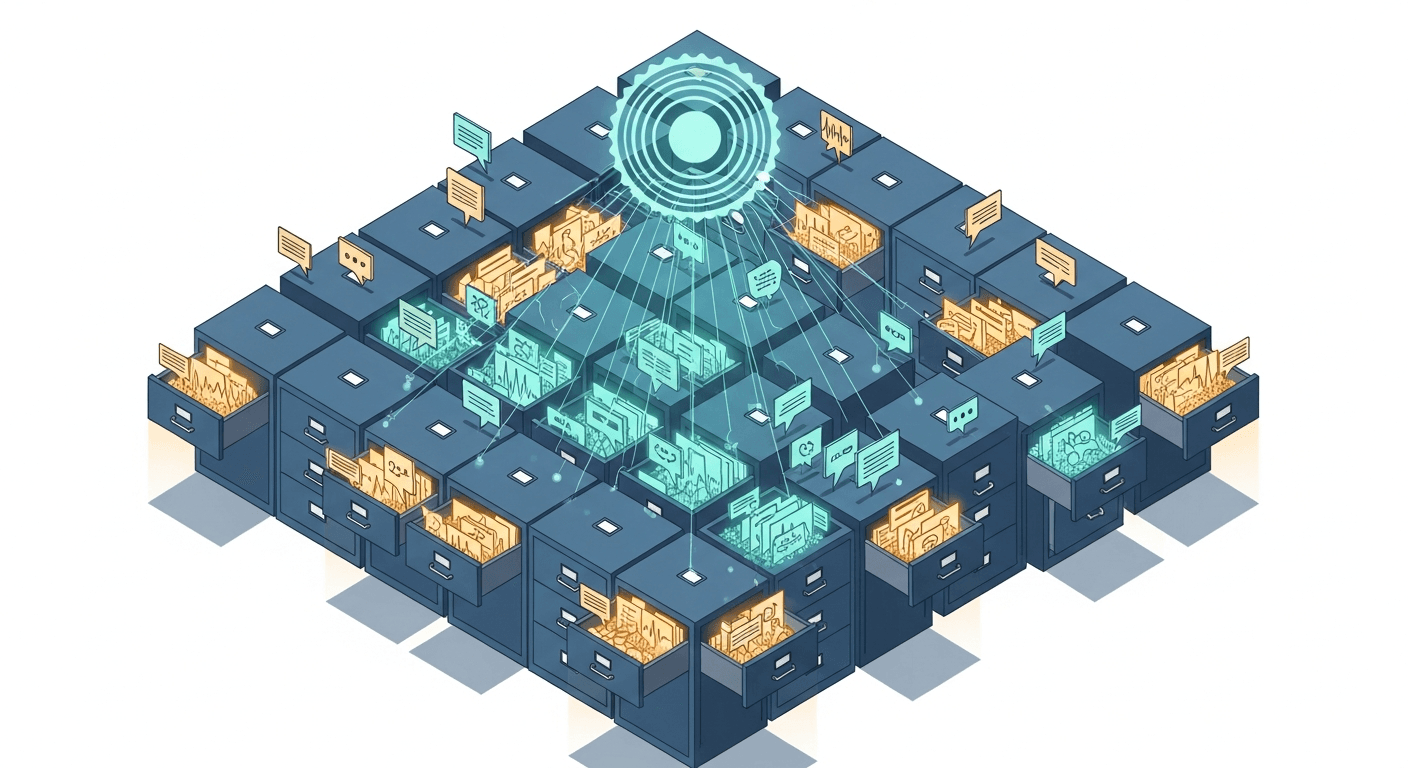
Government call recording compliance is one of the fastest-growing liability gaps in local and federal constituent offices today. City councils, county commissions, congressional district offices, and senate constituent services teams field thousands of calls, voicemails, emails, and text messages every year. Each interaction represents a constituent with a problem or request that staff are legally obligated to track — yet many offices still rely on sticky notes, personal cell phones, and shared email inboxes that nobody fully owns. Audit findings, public records litigation, and rising omnichannel communication volume have pushed recording compliance squarely onto the desks of operations directors and compliance officers right now.
Call Recording Laws That Apply to Government Agencies
Government offices face multiple overlapping legal frameworks. Understanding which laws apply is the first step toward defensible compliance.
The Federal Records Act requires federal agencies — including congressional offices — to preserve all documentary materials that document the organization's functions, policies, decisions, or essential transactions. NARA electronic records guidance covers emails, text messages, and call logs, and many constituent service offices are still catching up on Federal Records Act compliance.
Two recording-specific statutes further define what government offices can and must do:
- Electronic Communications Privacy Act (ECPA): Federal law prohibiting the interception of wire, oral, or electronic communications without consent. ECPA consent rules apply to government offices recording constituent calls in addition to any applicable state rules.
- State wiretapping and all-party consent laws: California Penal Code § 632 and Illinois's Eavesdropping Act both require all parties to consent before a call is recorded. Offices in all-party consent states must provide explicit disclosure — typically an automated message — before recording begins. Violations can carry criminal penalties and civil liability.
The local government open records act framework adds another layer: FOIA call logs and retained recordings may become subject to public disclosure requests. A call log created for internal compliance purposes can, in some circumstances, be requested by a journalist or advocacy group. Offices should factor public records exposure into retention and access policies from the start.
On international platforms: if an office uses cloud infrastructure hosted outside the United States or serves constituents abroad, GDPR may affect how a vendor processes those recordings. U.S. government offices are generally not directly subject to GDPR, but cloud vendors processing data of EU residents on the office's behalf may carry GDPR obligations — worth confirming in any vendor contract.
One-Party vs. All-Party Consent: Government Call Recording Compliance Essentials
ECPA consent rules are the most common source of confusion in government call recording compliance. The distinction is simple; the consequences of getting it wrong are not.
One-party consent means only one person on the call — typically the government employee — needs to know the call is being recorded. This is the federal default under ECPA and the rule in the majority of U.S. states.
All-party consent means every participant must be informed and must consent before recording begins. Eleven states currently require all-party consent for government recordings, including California, Illinois, Florida, Michigan, and Washington. A local government office in Sacramento or Chicago that records constituent calls without an upfront disclosure is potentially violating state wiretapping law — even when the person doing the recording is a government official.
| Jurisdiction | Consent Rule | Key Statute | Disclosure Required? |
|---|---|---|---|
| Federal (ECPA) | One-party | 18 U.S.C. § 2511 | No, but recommended |
| California | All-party | Penal Code § 632 | Yes — before recording |
| Illinois | All-party | 720 ILCS 5/14-2 | Yes — before recording |
| Florida | All-party | Fla. Stat. § 934.03 | Yes — before recording |
| Texas | One-party | Tex. Penal Code § 16.02 | No, but recommended |
| New York | One-party | N.Y. Penal Law § 250.00 | No, but recommended |
In practice, the safest approach for any government office — regardless of state — is to play a brief automated disclosure at the start of every inbound call: "This call may be recorded for quality and records-management purposes." This satisfies all-party consent requirements, creates a documented notice trail, and mirrors standard practice in every regulated industry. It is not a barrier to constituent service; it is a legal baseline.
Where Local and Legislative Offices Stand Today
The picture is uneven. On the federal side, congressional office recordkeeping carries clear Federal Records Act obligations, but individual offices retain wide discretion over which communication tools they use day to day. The House Chief Administrative Officer provides technology guidance, but procurement decisions rest with each office.
At the state and local level, most states have a public records law — often called sunshine laws or open records acts — governing how government communications must be retained and disclosed. The Reporters Committee for Freedom of the Press open government guide catalogs these state by state, and the variation is striking. Some states define "public record" broadly enough to include text messages sent from personal devices. Others have significant gaps.
What is consistent across nearly all jurisdictions is that compliance is lagging behind communication volume. A 2023 survey by the Government Technology research group found that fewer than half of local government agencies had a documented public records retention policy for text messages, even in states where such messages are legally classified as public records. Inbound constituent calls retained in a documented, searchable format are at even lower rates.
Congressional offices face a particular version of this problem. Staff turnover is high, caseload is significant, and the expectation that every constituent interaction is logged, attributed to a contact record, and retrievable years later conflicts with how most offices actually operate. According to the Congressional Management Foundation, congressional offices receive hundreds of thousands of contacts per year across calls, emails, letters, and in-person visits. Senate offices in populous states regularly process upward of a million contacts annually.
Text Message Retention and SMS Compliance for Government Offices
If call recording compliance is behind, text message retention for government is further behind still — and courts are taking notice. Several high-profile public records cases have turned on whether government officials deleted texts that should have been preserved. In American Oversight v. U.S. Department of State, courts affirmed that failure to preserve electronic communications — including call logs — constitutes a records management violation. The Courthouse News Service has documented multiple instances where municipalities faced sanctions because staff communications on personal or office phones were not retained under a proper public records retention policy.
The structural problem: most government offices have no system that automatically captures outbound SMS, routes inbound texts to a shared inbox, and archives both sides of the conversation with timestamps and contact attribution. Without that infrastructure, constituent communication logging depends entirely on individual staff behavior — which is not a compliance strategy. For a deeper look at managing SMS obligations without slowing response times, see Mastering SMS Compliance Without Slowing Your Response Time.
SMS compliance TCPA government messaging rules add further complexity. The 10DLC registration framework for business text messaging means offices sending outbound texts to constituents at any scale must now:
- Register sending numbers under 10DLC with the major carriers
- Document each messaging campaign's purpose and content
- Archive inbound and outbound SMS with timestamps and contact attribution
- Confirm TCPA applicability to their jurisdiction and use case
Many local government offices are unaware these requirements apply to them. City council staff who text constituents to confirm appointments or follow up on case status must treat those messages exactly as they would a formal letter. The channel has changed; the retention obligation has not. 10DLC compliance for public agencies is no longer optional — carriers are actively filtering non-registered traffic.
Shared Inboxes and Unofficial Channels Create Audit Gaps
One of the most common recording compliance weak points in city and county offices is the shared email inbox. A general contact address — info@cityof[x].gov or counciloffice@[county].gov — receives constituent inquiries, gets routed informally to staff, and generates replies that may or may not be preserved systematically. When a public records request arrives, these informal routing practices make it nearly impossible to produce a complete record. Shared inbox software for government teams that logs every inbound message, timestamps replies, and attributes them to a named staff member is a minimum baseline — not a luxury.
The same gap applies to phone systems. An office with a main number that rings to whoever picks up — no call logging, no voicemail transcription, no system for attributing missed calls to contact records — is operating on trust alone. Missed call follow-up in constituent services carries the same documentation obligation as a completed call.
Modern constituent communication tracking software addresses this by creating a per-contact timeline: every call, voicemail, text, and email attributed to a single record, with transcripts, timestamps, and staff attribution. QuorumVoice is built around this model — every inbound and outbound interaction logged, transcribed, and tied to a named contact record, directly addressing the audit trail problem that surfaces when a records request arrives. AI call answering for county offices and IVR phone systems adapted for government use can further automate capture, reducing reliance on staff memory. For a practical comparison of what basic call recording leaves out, see Call Recording vs. Full Conversation Intelligence: The Gap.
The National Association of Counties and the National League of Cities have both published resources encouraging member jurisdictions to review their records management practices. The practical gap between that guidance and what most offices are actually doing remains significant.
Government Call Recording Compliance Checklist
For operations and compliance leaders in city offices, county agencies, or constituent services teams, this checklist represents the clearest path from current exposure to defensible practice:
- Audit every communication channel. Phone lines, voicemail, email inboxes, text numbers, and any informal messaging tools staff have adopted. If it touches constituent contact, it belongs in your records management inventory.
- Identify your state's consent requirements. Determine whether your jurisdiction requires one-party or all-party consent. If you operate in California, Illinois, Florida, or another all-party consent state, implement an automated call recording disclosure before every recorded call.
- Map retention obligations by channel. Your state's open records law combined with applicable federal requirements defines minimum retention periods. If you lack a current map, your state archivist or NARA is a starting point.
- Implement auto-recording and voicemail transcription. Recording every call and transcribing voicemails automatically eliminates reliance on staff notes and creates a searchable archive for records requests or litigation.
- Move constituent-facing texting off personal phones. Deploy a platform that logs inbound and outbound SMS automatically, links messages to contact records, and archives them. Register sending numbers under 10DLC.
- Connect communication tools to a contact record system. Every call, voicemail, text, and email should be attributable to a named constituent with a complete chronological history. Missed call follow-up in constituent services should be logged just as a completed call would be.
- Establish a written retention policy. Document retention periods for each channel, designate a records officer, and make the policy accessible to all staff.
- Train staff on what counts as a record. Many compliance failures trace to staff who genuinely did not know a text message or voicemail carried the same retention obligation as a formal letter. Annual training with concrete examples is what makes policy real.
What a Records Audit Actually Looks Like
A constituent files a formal complaint alleging they called the county office three times over six months, spoke to different staff members each time, and received contradictory information. A public records request arrives demanding all communications related to that constituent. If the office has no call recording, no voicemail transcription, and no unified contact record, staff must manually search personal email, ask each employee whether they remember the calls, and hope nothing was deleted. Assembling even a partial record can take weeks — and it will still be incomplete.
Contrast that with an office running call recording public sector software that captures every channel: the records officer pulls the constituent's contact record, sees a chronological log of every call, voicemail, and text with transcripts and timestamps, and produces a complete response within the hour. That is not a hypothetical advantage — it is the difference between a resolved records request and a spoliation finding. For a broader look at building this kind of channel-agnostic audit trail, see How to Track Every Call, Email, and Text Without a Paper Trail.
Frequently Asked Questions
- Do government offices have to inform callers that calls are being recorded?
- In all-party consent states — California, Illinois, Florida, and others — yes. Government offices must provide explicit call recording disclosure before recording begins, typically via an automated message. In one-party consent states, disclosure is not legally required but is strongly recommended to protect against future disputes and build constituent trust.
- What federal call recording laws apply to public agencies?
- The primary federal statute is ECPA, which requires at least one-party consent for recording. Congressional and federal agency offices are also subject to the Federal Records Act, which requires preservation of call logs and related communications. NARA provides binding guidance on electronic records retention.
- Is it legal for local government offices to record constituent calls?
- Yes, provided consent requirements are met. In one-party consent states, an employee's knowledge that the call is being recorded is sufficient. In all-party consent states, the office must notify the constituent before recording. A disclosure message at the start of every call satisfies both requirements in all jurisdictions.
- How long must government agencies retain recorded phone calls?
- Retention periods vary by jurisdiction and record category. Federal agencies follow NARA-approved records schedules, which can require retention from three years to permanently depending on content. State and local offices follow their state's public records law. Offices should consult their state archivist and legal counsel to establish channel-specific retention schedules.
- What is the difference between one-party and all-party consent for government recordings?
- One-party consent means only one participant — typically the government employee — needs to know the call is being recorded. All-party consent means every person on the call must be informed and consent before recording begins. Eleven states require all-party consent; all other states and federal law default to one-party consent.
- Does GDPR apply to government call recording in the U.S.?
- U.S. government offices are not directly subject to GDPR. However, if an office uses a cloud platform that processes communications involving EU residents, the vendor may carry GDPR obligations affecting how recordings are stored and accessed. Review vendor contracts for data processing agreements and storage location disclosures.
- Are voicemails and text messages subject to the same compliance rules as phone calls?
- Yes. Voicemails are electronic records subject to Federal Records Act and state open-records requirements. Text messages — including those sent from personal phones on government business — are public records in most states and must be retained accordingly. Offices should use platforms that automatically archive both channels with timestamps and contact attribution.
Offices that build a channel-agnostic communication logging practice now — one that captures calls, voicemails, texts, and emails, ties them to contact records, and stores them in a searchable archive — will be far better positioned when regulatory requirements tighten than offices still reconstructing records from personal phones and informal inboxes. The government call recording compliance case and the operational case point in the same direction. The only variable is how quickly the infrastructure gets built.
Written by

Derrick Threatt is an AI Automation Engineer and marketing operations leader who builds AI-driven systems, automations, and data workflows to improve revenue, operations, and team productivity.
View all posts →Latest from the blog. Keep reading.
View all →
Best Phone Systems for Small Business in 2025: Honest Picks for Teams That Can't Afford to Miss a Call
HOA and property management offices need more than sales-team phone tools. See how Allo, OpenPhone, Dialpad, Nextiva, and QuorumVoice handle resident calls.

40 HOA & Property Management Text Message Templates (Copy-Paste Ready)
40 copy-paste HOA and property management text templates for missed calls, maintenance updates, dues reminders, and after-hours compliance.

SMS Opt-In Examples & Compliant Templates for HOAs and Property Managers
Copy-paste SMS opt-in examples and compliant templates built for HOAs and property managers, covering 10DLC rules, confirmation texts, and consent tracking.