AI Answering Service vs Live Receptionist: Cost and Benefits
Compare AI answering service vs live receptionist on cost, availability, and call quality to find the best fit for your business.
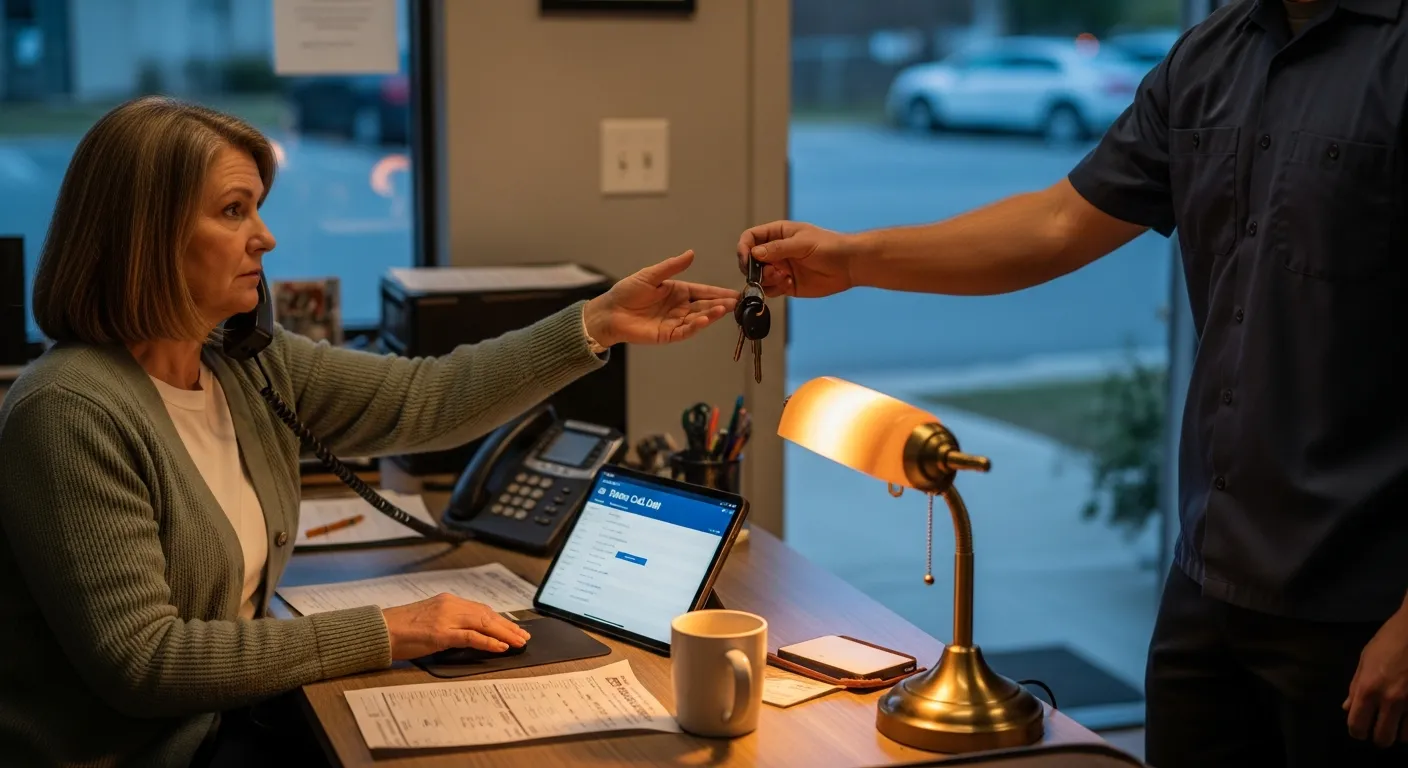
Every business that handles inbound calls eventually faces the same decision: staff a live receptionist or deploy an AI answering service. The AI vs human answering service debate has sharpened as AI has moved from clunky phone trees into capable conversational agents — but "more capable" doesn't automatically mean "better for your situation." Cost, availability, caller experience, and call type all factor in. This article breaks both options down side by side with real pricing, honest trade-offs, and a scenario-by-scenario guide to help you choose.
Before comparing, it helps to define terms. An AI receptionist is software that handles calls autonomously using speech recognition and natural language processing — no human involved. A virtual receptionist is a remote human agent working on your behalf through an outsourced service. The distinction matters because pricing models, capabilities, and failure modes differ fundamentally across the two.
| Dimension | AI Answering Service | Live Receptionist Service |
|---|---|---|
| Monthly Cost (typical) | $30–$300/mo (software-based); $0.05–$0.20/min for usage tiers | $250–$1,500+/mo for shared agent plans; $3,000–$6,000/mo for dedicated staff |
| Availability | 24/7/365, no holidays, no call-outs | Business hours standard; 24/7 costs significantly more |
| Average Answer Speed | Under 1 second | 20–45 seconds average hold time on shared plans |
| Complex / Emotional Calls | Limited; escalation required | Strong; human judgment and empathy available |
| Accuracy of Message Taking | Very high for structured data; lower for nuanced context | High when agents are well-trained; variable across services |
| Setup Time | Hours to days | Days to weeks (script training, onboarding) |
What an AI Answering Service Can Actually Do
An AI answering service uses speech recognition and natural language processing to handle inbound calls without a human agent. The caller speaks naturally; the AI captures intent, answers FAQs, routes calls, takes messages, or completes simple transactions like appointment bookings. Modern systems handle dozens of concurrent calls without degradation — something no human team can match at comparable cost.
Where AI Phone Answering Excels
- Cost at scale: Once configured, AI handles hundreds of concurrent calls for roughly the same price as handling ten — no per-agent cost that multiplies with volume.
- Consistent availability: AI answers at 2 a.m. on a holiday weekend with no overtime premium, making it the practical choice for any after-hours answering service.
- Speed: Calls are answered in under a second — no hold queues, no music.
- Automatic logging: Most AI services produce call transcripts that pair naturally with platforms like QuorumVoice, which links every call, voicemail, and SMS to a per-contact record — removing manual note-taking entirely.
- Consistency: The AI never has a bad day, never forgets to collect a callback number, and applies your script identically on call 1 and call 1,000.
Where AI Phone Answering Falls Short
- Emotional nuance: A distressed caller may feel dismissed by an AI voice. Some callers hang up the moment they realize they're not speaking with a human.
- Off-script inquiries: When a call goes somewhere unexpected, AI systems can loop, misroute, or produce unhelpful responses. Good systems escalate gracefully; poor ones frustrate callers.
- Credibility gaps: Sophisticated callers — attorneys, enterprise clients — may feel underserved when they detect an AI.
- Configuration overhead: Setting up an accurate AI call flow requires ongoing tuning. Someone internally needs to own the process and review transcripts periodically.
- Accent and vocabulary handling: NLP accuracy varies across accents, dialects, and industry-specific terms. An AI answering service for HVAC or a phone system for a plumbing business needs training on trade-specific language — service codes, part names, job types — or misrouting becomes a real problem.
- Compliance requirements: For medical practices, HIPAA governs how call data is stored and transmitted. For businesses taking payments by phone, PCI-DSS applies. Confirm any AI vendor's compliance posture before deployment.
Can Callers Tell They're Talking to AI?
Modern AI voices have narrowed the perception gap considerably. Many callers won't immediately recognize an automated system — especially on routine inquiries. That said, the moment a caller asks something unexpected, the seams show. Industry best practice is to disclose upfront that callers are interacting with an automated assistant, both for trust and to manage expectations. Older adults and high-stakes professional contexts remain more resistant to AI; factor that in if your business serves those audiences heavily.
AI Answering Service Cost: What You'll Actually Pay
Software-only AI services typically start between $30 and $150 per month for low-volume plans, with usage-based pricing adding $0.05–$0.20 per minute or per conversation. In full-year terms:
- AI-only plan at $150/mo ≈ $1,800/yr
- Shared live receptionist at $500/mo ≈ $6,000/yr
- Dedicated in-house receptionist ≈ $45,000–$65,000/yr including benefits and payroll taxes (per U.S. Bureau of Labor Statistics wage data)
The annual gap between AI and a shared live service alone is roughly $4,200. For property managers evaluating specific platforms, this complete guide to AI answering services for property managers covers the considerations worth knowing before you buy.
Live Receptionist Services: Real People, Real Trade-offs
A live receptionist — whether in-house or outsourced — puts a human on the line who can listen, adapt, respond to tone, and exercise judgment. In any virtual receptionist comparison, the core question is how much of your actual call volume genuinely requires those capabilities.
Where Live Receptionists Win
- Emotional intelligence: Humans pick up on frustration, urgency, and confusion. A live receptionist can de-escalate an angry caller, offer a genuine apology, or ask clarifying questions naturally.
- Flexible handling of unusual situations: When a call goes somewhere unexpected, a human can improvise — consult a colleague, find an answer, or make a judgment call about urgency.
- Credibility with certain caller profiles: Legal clients, high-value sales prospects, and government contacts often expect a human as a baseline professional standard.
Where Live Receptionists Fall Short
- Cost: A full-time in-house receptionist earns $35,000–$55,000 annually before benefits. Outsourced shared-agent services run $250–$900/month for basic plans, climbing quickly for after-hours coverage or high volume.
- Availability gaps: True 24/7 live coverage requires shift scheduling most small organizations cannot afford.
- Inconsistency: Agent quality varies. A rushed receptionist or a new hire can deliver a worse experience than a well-configured AI.
- No automatic transcript: Unless you're running a call-recording platform, information captured by a live receptionist lives in a sticky note or someone's memory. Pairing live reception with a tool like QuorumVoice — which logs and transcribes every call tied to a contact record — closes that gap significantly.
Live Receptionist Service Pricing
The major outsourced providers — including Ruby Receptionists, PATLive, and Gabbyville — charge based on minutes used per month:
- Entry-level (50–100 min): $250–$350/month
- Mid-tier (500+ min): $600–$900/month
- Dedicated agent plans: $3,000–$6,000/month or more
Setup involves script writing, agent training, and call routing configuration — typically one to three weeks. Live receptionist service pricing scales with volume in ways AI cost does not, making human services less predictable for businesses with fluctuating call patterns.
The Hybrid Option: AI + Live Receptionist Blends
A third category deserves attention: hybrid services that combine AI and human agents in a single workflow. Services like Smith.ai use AI to handle routine calls — FAQs, appointment scheduling, call routing — while flagging complex or emotionally sensitive calls for transfer to a live agent.
Pros: 24/7 coverage at AI price points for the majority of calls; human judgment available for edge cases; lower risk of caller frustration than pure AI.
Cons: More expensive than AI-only; handoff friction can frustrate callers if not scripted carefully; you're dependent on a single vendor's quality across both layers.
Typical pricing: Hybrid plans generally run $200–$600/month depending on call volume and the ratio of AI-to-human handling — more than pure AI, less than fully staffed live reception.
Property management and HOA operations have used hybrid models to cut after-hours staffing costs while maintaining a human escalation path for maintenance emergencies. For those managing call routing across complex organizations, call routing strategies for HOAs and property managers covers the specific flow logic worth configuring.
AI vs Human Answering Service: Which Wins by Scenario?
After-Hours and Weekend Coverage
AI wins clearly. A live service with genuine 24/7 coverage costs two to three times more than a standard business-hours plan. AI never sleeps and doesn't charge overtime. For contractors needing missed-call text-back, or HVAC and plumbing businesses fielding emergency calls at 11 p.m., an AI service that captures the issue and routes an alert to on-call staff is far more practical than staffing a human around the clock.
High-Volume Repetitive Inquiries
AI wins again. If your top ten call types cover 80% of your volume — office hours, appointment confirmations, balance inquiries, order status — there is no meaningful value added by a human fielding those calls. AI handles them faster, cheaper, and at any scale without quality degradation.
Sensitive or Emotionally Charged Calls
Live receptionist wins. When someone calls to report a serious problem or a safety concern, a human voice matters. The ability to say "I understand — I'm going to make sure someone calls you right back" with genuine tone is not something current AI systems replicate convincingly.
First Impressions for Professional Services
Live receptionist has the edge, though the gap is narrowing. For law firms, investment advisors, or high-end consultancies, a new prospect's first call is a trust signal. A live receptionist is the safer investment for inbound new-business calls specifically.
AI Phone Answering for Small Business on a Tight Budget
AI wins on cost. A well-configured AI service at $50–$150/month is dramatically cheaper than any live option — a practical choice for a plumbing business, a small HVAC company, or any trade contractor who needs coverage without a corresponding labor budget. A business phone system price comparison can help clarify what you're actually paying for across tiers.
A Practical Framework for Choosing
Before signing up for either option, work through these four questions honestly:
- What percentage of your calls are genuinely complex or emotionally sensitive? If the honest answer is under 20%, AI can handle the bulk of your volume with live escalation reserved for exceptions.
- What are your hours of operation, and when do most calls arrive? If significant volume arrives outside business hours, AI is likely the only cost-viable option for that coverage window.
- What is a missed or mishandled call actually worth? A missed call at a legal intake line may represent thousands in lost revenue. A missed routine inquiry at a property management office is a minor inconvenience. Scale your investment accordingly.
- Do you have internal capacity to configure and maintain an AI system? AI is not set-it-and-forget-it. Someone needs to own the call flows, review transcripts, and update scripts when your services or policies change.
If you automate outbound SMS alongside inbound call handling — appointment reminders, missed-call text-back — review the 2025 TCPA consent playbook before launching. Compliance obligations apply regardless of whether a human or AI sends the message.
The AI vs human answering service decision is rarely permanent. Many businesses start with AI, refine their call flows using real transcript data, and then make a more informed decision about where human coverage adds enough value to justify its cost. Whatever you choose, make sure the communication data from those calls is captured, logged, and linked to your contacts. Answering the phone is only half the job — knowing what was said and acting on it is the other half.
Frequently Asked Questions
An AI answering service is software that answers inbound calls autonomously, without a human agent. It uses speech recognition to transcribe what a caller says and natural language processing to determine intent — then responds, routes the call, takes a message, or completes a task like booking an appointment. Most systems handle multiple calls simultaneously and operate around the clock.
Sometimes. Modern AI voices are significantly more natural than they were even two years ago, and many callers won't immediately recognize an automated system on routine calls. Detection risk rises the moment the conversation goes off-script. Best practice is to disclose upfront that callers are speaking with an automated assistant — it manages expectations and avoids trust erosion mid-call. Older callers and high-stakes professional contacts tend to be more sensitive to AI detection.
Most plans for small businesses start between $30 and $150 per month for low call volumes, with usage-based pricing of $0.05–$0.20 per minute on top. Mid-tier plans run $150–$300/month. By comparison, shared virtual receptionist plans start around $250/month and scale to $900/month or more. An in-house full-time receptionist costs $45,000–$65,000 per year including benefits — making AI the lowest-cost option by a wide margin for businesses that can use it effectively.
An AI receptionist is fully automated — software handles every call with no human involvement. A virtual receptionist is a real person working remotely, typically through an outsourced answering service. The AI option costs less and scales easily but lacks human judgment. The virtual receptionist costs more and has availability limits but handles nuanced, emotional, or unexpected conversations far better. Some services blend both into a hybrid model, using AI for routine calls and routing complex situations to a live agent.
The main disadvantages are: limited ability to handle emotional or complex calls, risk of caller frustration when the AI goes off-script, potential credibility concerns with sophisticated caller segments, compliance requirements around data handling (HIPAA for medical, PCI for payments), and ongoing configuration work to keep call flows accurate. AI also struggles with heavy accents, unusual dialects, and industry-specific vocabulary unless specifically trained on that language.
Yes — and this is one of its strongest use cases. AI operates 24/7/365 with no overtime costs, no scheduling gaps, and no call-outs. For contractors needing after-hours coverage, HVAC businesses fielding emergency dispatch calls, or property managers receiving maintenance requests at night, AI can capture the issue, send an alert to on-call staff, and ensure no call goes unanswered. Live services can offer after-hours answering service coverage too, but typically at two to three times the cost of standard business-hours plans.
Written by

Latest from the blog. Keep reading.
View all →
Best Phone Systems for Small Business in 2025: Honest Picks for Teams That Can't Afford to Miss a Call
HOA and property management offices need more than sales-team phone tools. See how Allo, OpenPhone, Dialpad, Nextiva, and QuorumVoice handle resident calls.

40 HOA & Property Management Text Message Templates (Copy-Paste Ready)
40 copy-paste HOA and property management text templates for missed calls, maintenance updates, dues reminders, and after-hours compliance.

SMS Opt-In Examples & Compliant Templates for HOAs and Property Managers
Copy-paste SMS opt-in examples and compliant templates built for HOAs and property managers, covering 10DLC rules, confirmation texts, and consent tracking.