How to Contact Your HOA (and What to Do When Nobody Answers)
Not sure who runs your HOA or how to reach them? Here's how to find the right contact, what Texas law requires your association to publish, and what to do when nobody calls back.

You have a question about your fence, your dues, or the pool gate, and you have no idea who to ask. Maybe the number on the old welcome letter goes to a full voicemail box. Maybe the board changed and nobody told you. You're not alone: "how to contact my HOA" and "who is my HOA" are searched every month by homeowners in exactly that spot.
Here's how to find the right contact, what Texas requires your association to publish, and what to do if nobody answers.
Step 1: Figure out who actually runs your HOA
Every HOA is run by a volunteer board of homeowners. Some boards do everything themselves (a self-managed HOA). Others hire a management company to handle calls, dues, and paperwork. Knowing which one you have tells you who to call.
Places to look, quickest first:
- Your dues statement or coupon book. Whoever sends the bill usually handles questions. If it's a management company's name, start there.
- Your closing documents. The title company collected a resale certificate and contact details when you bought.
- The community website or newsletter. Many list the board, a contact email, and the manager.
- Signs at the entrance, pool, or clubhouse. These often show a management company and phone number.
- Neighbors. Someone on your street has paid the same dues for years and knows who sends the bill.
Step 2: In Texas, check the HOA management certificate
If those don't work, Texas has a public record built for exactly this. Under Texas Property Code §209.004, a property owners' association must record a management certificate in the county records. It must list the association's name and mailing address, and the name, mailing address, telephone number, and email address of the person managing the association or its designated representative.
Associations must also file that certificate electronically with the Texas Real Estate Commission, which makes it searchable online at hoa.texas.gov. Search by your subdivision or association name. The certificate also has to be updated within 30 days after the association learns of a change, so the most recent filing is usually the best contact you'll find.
The address on the latest management certificate matters for another reason. Some formal requests under Texas law, like a written request to inspect the association's books and records, are sent by certified mail to that address (§209.005).
Step 3: Reach out the right way
- For quick questions (pool hours, trash day, the gate), call or email the contact on the certificate or the community website.
- For anything that might matter later (a dispute, a request for approval, a billing error), put it in writing and keep a copy. Include your name, property address, a clear description, and what you're asking for.
- For formal requests like records inspection, follow the method the law spells out, which is often certified mail to the address on the latest management certificate.
- Go to a board meeting. In Texas, regular and special board meetings must generally be open to owners, with notice given in advance (§209.0051). It's often the fastest way to put a face to a name.
What to do when your HOA isn't responding
Unanswered calls are rarely about ignoring you. In many communities the "HOA phone" is really one volunteer's cell phone. The voicemail fills up, messages get forwarded around a group text, and when a board member steps down, the history leaves with them.
If you're stuck:
- Switch channels. If a call went to voicemail, follow up by email, and save both.
- Check that you have the current contact. Boards and managers change. Look up the latest management certificate.
- Write to the board directly. Address the board, not just the manager, and keep it short and specific.
- Attend the next meeting and raise it during owner comments.
This article is general information, not legal advice. For a specific dispute, talk to a Texas attorney who handles HOA matters.
For board members: make your HOA easy to reach
If you're on a board and this post sounds familiar, the fix is simpler than it looks. Residents need one number that belongs to the association, not to whoever is president this year.
QuorumVoice is a phone system and AI answering service built for HOA boards and property managers. You can keep the number residents already call (we port it) or get a new local one. Quill, our AI answering service, picks up and answers from the documents and rules you give it, takes messages, and can transfer to a board member who's available. Every call, text, email, and voicemail lands in one shared inbox, filed to the resident, so the next board inherits the whole history instead of a blank slate.
Greater Houston communities can apply for one of ten Founding Communities seats, which include ninety days on Pro, free, with hands-on setup.
Written by

Derrick Threatt is an AI Automation Engineer and marketing operations leader who builds AI-driven systems, automations, and data workflows to improve revenue, operations, and team productivity.
View all posts →Keep reading.
QuorumVoice for HOA boards
One board number, every resident call on record, and Quill after hours.
See the page →QuorumVoice vs Quo
A sourced side-by-side of Quo and QuorumVoice: channels, AI and pricing.
Read the comparison →QuorumVoice vs Smith.ai
A sourced side-by-side of Smith.ai and QuorumVoice: channels, AI and pricing.
Read the comparison →
HOA Payment Plans in Texas: What Homeowners Can Ask For
Behind on HOA dues? In Texas, most associations must offer an alternative payment schedule of at least three months. Here's what the law says, the exceptions, and how to ask.

5 After-Hours Answering Services for HOA and Property Managers to Consider
Weekend emergencies swamp HOA offices with no clear record of what got handled. Here are 5 after-hours answering options and how to evaluate them.
How to Pick an After-Hours Answering Service for HOA Boards
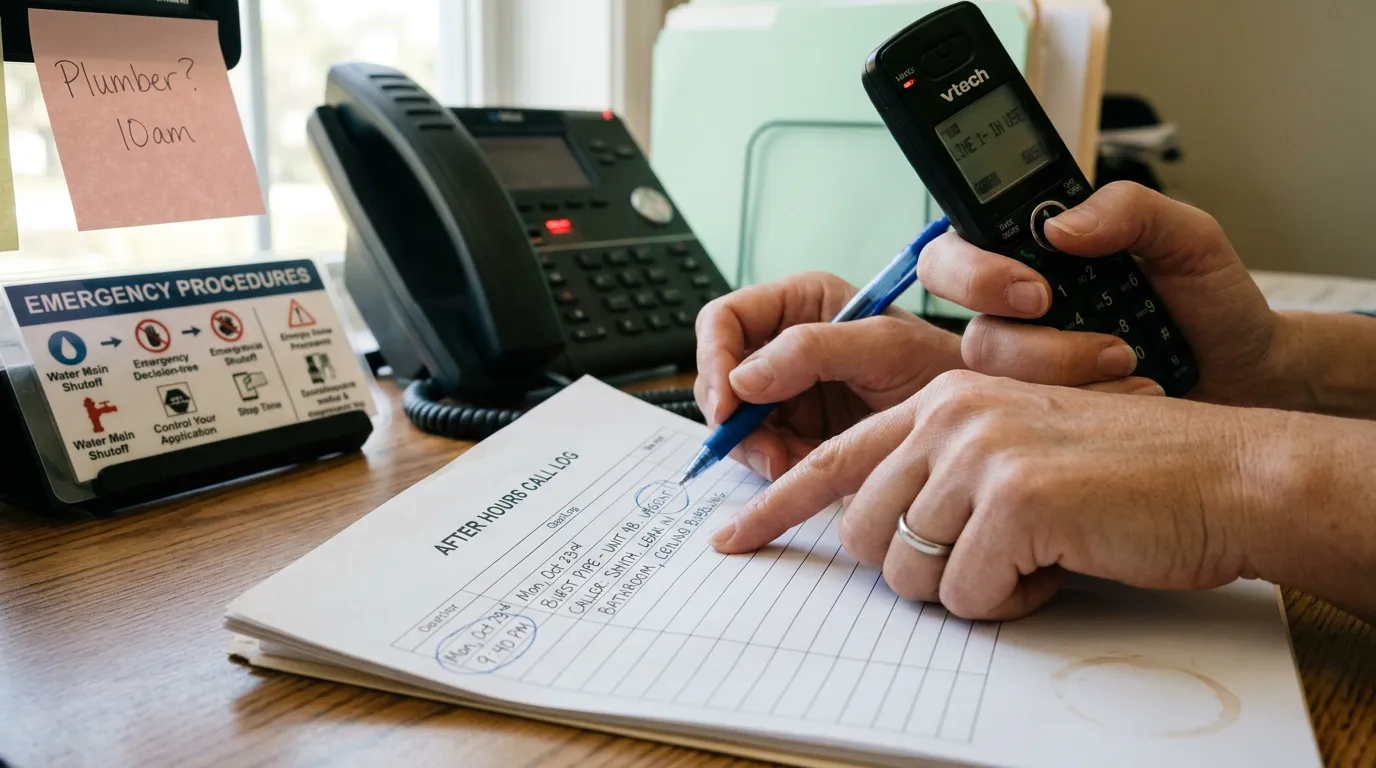
A burst pipe at 9:40pm shouldn't turn into a board complaint. Here's how HOA boards pick, configure, and audit an after-hours answering service.