Top AI Phone Systems for Overwhelmed HOA & Property Managers
Compare the best AI phone systems for HOA boards and property managers—see pricing, features, and call logging tools that stop dropped calls.

Small HOA boards and small property management offices face the same call volume problems as enterprise call centers, just with far fewer people to handle them. When a two- or three-person office fields gate code requests, violation disputes, maintenance emergencies, and board questions in the same afternoon, something always slips. Modern AI phone systems promise to close that gap, but the real test is whether they fit a lean team's workflow, not just a feature list. Choosing among the best auto attendant phone systems means weighing call routing, after-hours coverage, and message logging against what a small staff can actually manage without hiring another coordinator. We compared each tool below on setup effort, small business auto attendant pricing, fit with property management workflows, and how well it stops small unresolved items — the callback nobody made, the voicemail nobody logged — from turning into bigger problems.

Best AI Phone Systems and Auto Attendants at a Glance
| Tool | Best for | Pricing | Standout feature |
|---|---|---|---|
| QuorumVoice | HOAs and property managers who need every call, text, and voicemail logged to a contact record | Custom plans based on unit count and call volume | Auto-transcribes and categorizes every conversation into a per-contact timeline |
| RingCentral | Growing management companies with multiple offices | From roughly $20 to $35 per user/month | Deep call routing and analytics for larger teams |
| Grasshopper | Solo managers and very small HOAs on a budget | From roughly $14 to $55/month, flat rate | Simple virtual number setup with no hardware |
| OpenPhone | Small teams that want shared texting alongside calls | From roughly $15 to $23 per user/month | Shared numbers with a collaborative inbox for calls and SMS |
| Ooma Office | Offices that still want a physical desk phone option | From roughly $20 to $30 per user/month | Reliable auto attendant with virtual receptionist scheduling |
| GoTo Connect | Management companies wanting phone plus video/meetings bundled | Around $29+ per user/month, seat-dependent | Drag-and-drop call flow builder |
| Nextiva | Companies wanting a phone system tied to broader customer service tools | From roughly $19 to $33 per user/month | Built-in CRM-style contact history |
Why AI Phone Systems Matter for Overwhelmed HOA Offices
A basic auto attendant just routes calls. AI phone systems go further: they transcribe voicemails, tag conversations by topic, and attach every call and text to a homeowner's record automatically. For an office with no dedicated front-desk staff, that difference determines whether a promised callback actually happens or quietly disappears. For a closer look at how this plays out day to day, see this breakdown of high-volume homeowner communication.
QuorumVoice
QuorumVoice is built around the front-office chaos small HOAs and property management companies deal with daily: a phone that rings constantly, texts arriving after hours, and emails piling up between board meetings. Rather than treating the auto attendant as a menu that just routes calls, it captures the whole conversation — the call, the voicemail, the follow-up text — and files it against the homeowner's contact record automatically. The real risk for an overwhelmed office isn't a missed call; it's a loose end: the voicemail answered informally but never logged, the text reply that lived only on someone's personal phone, the callback nobody wrote down. Among AI phone systems built for this audience, QuorumVoice is one of the few designed around call logging for property management rather than just moving calls faster.
Strengths: automatic transcription and categorization of every call, voicemail, text, and email; a searchable per-contact timeline boards and managers can reference during disputes; routing rules built around property management workflows like maintenance requests and violation calls.
Limitations: as a platform built for this niche, it's a poor fit outside HOA and property management-style front offices; pricing requires a conversation rather than a self-serve checkout.
Pricing: custom, based on unit count and expected call/text volume — worth a direct QuorumVoice quote request.
Best for: HOA boards and small management companies that need a documented, board-defensible record of every homeowner interaction, not just a phone tree. Boards weighing this platform against alternatives may also want this comparison of QuorumVoice alternatives.
RingCentral
RingCentral is one of the more established names in business phone systems, and its auto attendant tools suit companies expecting to add staff, offices, or associations over time. The call flow builder supports multiple levels of routing, and the mobile app lets a manager step out without losing calls. For a management company overseeing a handful of communities today but planning to add more, it scales without a full system replacement — a real consideration for phone systems for HOA boards that expect their portfolio to grow.
Strengths: flexible multi-level auto attendant menus, strong mobile and desktop apps, integrations with common CRM and helpdesk tools.
Limitations: the interface has a learning curve for non-technical staff, and lower-tier plans strip out features small offices often want, pushing budget-conscious teams toward mid-tier pricing.
Pricing: roughly $20 to $35 per user per month depending on tier and contract length; see RingCentral's plan comparison for current tiers.
Best for: management companies handling several HOAs or condo associations that expect to grow staff or portfolio.
Grasshopper
Grasshopper is a virtual phone system rather than a full unified communications platform, which is exactly why it appeals to very small HOAs and one- or two-person management offices. There's no hardware, no desk phones, and setup usually takes under an hour. The auto attendant covers the basics — business hours, holiday greetings, simple menu routing — without asking a volunteer board treasurer to configure anything complicated. For anyone comparing small business auto attendant pricing on a tight budget, it's one of the cheapest ways to sound like a real office.
Strengths: fast setup, low cost, works entirely through existing cell phones, good for boards without a dedicated office.
Limitations: no built-in CRM or contact history, limited reporting, and no call or conversation transcription, so tracking who said what to which homeowner still falls on staff memory or manual notes.
Pricing: roughly $14 to $55 per month, flat rate rather than per user; see Grasshopper's pricing page.
Best for: volunteer-run HOAs or self-managed associations that need a professional-sounding number without an office phone system.
OpenPhone
OpenPhone leans into shared numbers and a collaborative inbox, which suits the small property management office where two or three people cover the same lines and need to see each other's texts and calls without forwarding screenshots back and forth. The auto attendant setup is straightforward, and because texting is a first-class feature rather than an add-on, it works well as a virtual receptionist for small offices that get as many homeowner texts as calls. Offices weighing whether a shared inbox is worth the switch may find this look at shared inboxes for email and text useful.
Strengths: shared inbox for calls and texts, simple auto attendant builder, solid mobile app for managers who split time between the office and site visits.
Limitations: reporting and categorization are lighter than platforms built specifically around compliance and record-keeping, which matters if a board later needs to prove what was communicated and when — a real concern given consent and documentation requirements under the Telephone Consumer Protection Act.
Pricing: roughly $15 to $23 per user per month; see OpenPhone's pricing page.
Best for: small teams that text homeowners as much as they call them and want everyone working from the same inbox.
Ooma Office
Ooma Office fits the property management office that still wants an actual desk phone at the front desk, plus a virtual receptionist for after-hours or overflow calls. It's a more traditional business phone system with a modern auto attendant layered on top, which some smaller offices find easier to trust than a fully app-based tool.
Strengths: reliable call quality, physical hardware options, virtual receptionist with time-of-day routing, transparent per-user pricing.
Limitations: fewer text-messaging features than newer, text-first platforms, and integrations with property management software are limited compared to purpose-built alternatives.
Pricing: roughly $20 to $30 per user per month; see Ooma Office pricing.
Best for: offices that want a mix of desk phones and mobile coverage without a big up-front hardware investment.
GoTo Connect
GoTo Connect bundles phone, video meetings, and messaging into one subscription, which appeals to management companies already using GoTo's meeting tools for board sessions and want billing and administration in one place. Its call flow editor is visual and drag-and-drop, so a manager can build a "press 1 for maintenance, press 2 for billing" menu without submitting a support ticket — a decent option if you want HOA phone system software and video conferencing from one vendor.
Strengths: visual call flow builder, bundled video conferencing for board and owner meetings, decent mobile app.
Limitations: pricing gets less predictable as seat counts and add-ons grow, and the platform is broader than most small HOAs need, meaning some paid features go unused.
Pricing: starts around $29 per user per month, seat-dependent; see GoTo Connect pricing.
Best for: management companies that also run frequent virtual board meetings and want video and phone under one vendor.
Nextiva
Nextiva positions its phone system alongside broader customer service and CRM-style tools, so calls automatically attach to a contact history similar to a sales or support platform. For a company that wants an auto attendant for property managers that behaves a little more like a lightweight CRM, Nextiva bridges that gap without requiring a separate database.
Strengths: built-in contact history, decent analytics, solid auto attendant customization, good customer support reputation.
Limitations: longer contract terms often get the best pricing, a poor fit for a small HOA board unsure of its vendor long-term, and the interface assumes more staff setup time than a two-person office may have.
Pricing: roughly $19 to $33 per user per month depending on contract length; see Nextiva's pricing page.
Best for: management companies that want phone and lightweight contact-history tracking without adopting a separate CRM.
How to Choose the Best Auto Attendant Phone Systems for Your HOA
The right pick depends less on feature checklists and more on how your office actually operates day to day.
- Volunteer-run HOA with no office staff: a lightweight virtual system like Grasshopper covers the basics — professional greeting, simple routing to board members' cell phones — without asking anyone to learn a new platform.
- Small management company (2-5 staff) juggling multiple communities: look for AI phone systems that log and categorize conversations automatically, since staff turnover and homeowner disputes both hinge on having a record, not a memory, of what was said. QuorumVoice and Nextiva both lean this direction.
- Growing management company adding communities or staff: RingCentral or GoTo Connect scale more comfortably as seat counts and call volume climb. For a wider view of pricing tiers across vendors, see this business phone system price comparison.
- Offices that text as much as they call: OpenPhone's shared inbox or QuorumVoice's unified logging keep texts from becoming an untracked side channel — an increasingly important distinction given FCC guidance on texting compliance and the consent rules many associations now have to document. For a deeper look at consent requirements, see this TCPA consent playbook for property managers.
Whichever system you land on, ask a vendor the same three questions: does the auto attendant route calls the way homeowners actually call in (maintenance vs. billing vs. board questions), does it capture voicemails and texts in one place, and does it make it easy to hand off a conversation between staff members without losing context? Those questions eliminate more mismatched tools than any pricing comparison. Call flow design also matters more than most offices assume — see these call routing strategies that cut complaints for specifics. And for boards weighing whether an auto attendant alone is enough or whether they need something closer to a live answering service, it's worth reading this guide to AI answering services for property managers before signing a contract.
Frequently Asked Questions
What is an auto attendant phone system?
An auto attendant is the automated menu that greets callers and routes them — by voice prompt, keypad selection, or time of day — to the right person, voicemail box, or department. The best auto attendant phone systems go further, logging or transcribing the call so staff aren't relying on memory afterward.
How much does a small business auto attendant cost?
Most small business auto attendant pricing falls between $14 and $35 per user per month, though flat-rate plans like Grasshopper's and custom-quoted platforms like QuorumVoice break from that per-seat model. Expect higher tiers to unlock features like call recording, analytics, and integrations.
Do small HOA boards actually need a dedicated phone system?
Not always. A volunteer-run association with a handful of units may only need a simple virtual receptionist for small offices, such as Grasshopper. Once a board or management company is fielding daily maintenance, billing, and violation calls across multiple staff, a system with call logging for property management becomes worth the cost.
Can an auto attendant help with TCPA and texting compliance?
An auto attendant alone doesn't handle consent tracking, but pairing one with a platform that logs calls, texts, and voicemails against a contact record makes it far easier to show what was communicated and when — which matters under TCPA consent rules for associations that text homeowners.
What's the difference between an auto attendant and a virtual receptionist?
An auto attendant is the automated menu system itself; a virtual receptionist typically refers to the broader service — automated or AI-assisted — that greets callers, answers basic questions, and routes or logs the interaction, often including after-hours coverage that a plain auto attendant menu doesn't provide.
If your office is still fielding homeowner calls, texts, and emails through three different channels with no shared record, the tool matters less than the habit of capturing everything in one place. A basic auto attendant answers the phone; the best AI phone systems also make sure nothing said on that call disappears the moment someone hangs up. For a two-person HOA office, Grasshopper or Ooma Office will get a professional greeting and basic routing in place fast. For a small management company juggling several associations and a mix of calls, texts, and emails, QuorumVoice or Nextiva are worth the closer look because they turn every inbound message into a searchable record instead of one more loose end. And for a company planning to grow its portfolio or staff over the next year or two, RingCentral or GoTo Connect give you room to scale without another system migration down the road. Whichever direction you go, the goal stays the same: fewer dropped calls, fewer forgotten callbacks, and a record you can point to the next time a board member asks what happened with a homeowner complaint.
Written by

Keep reading.
QuorumVoice for HOA boards
One board number, every resident call on record, and Quill after hours.
See the page →QuorumVoice vs Quo
A sourced side-by-side of Quo and QuorumVoice: channels, AI and pricing.
Read the comparison →QuorumVoice vs Smith.ai
A sourced side-by-side of Smith.ai and QuorumVoice: channels, AI and pricing.
Read the comparison →
5 After-Hours Answering Services for HOA and Property Managers to Consider
Weekend emergencies swamp HOA offices with no clear record of what got handled. Here are 5 after-hours answering options and how to evaluate them.
How to Pick an After-Hours Answering Service for HOA Boards
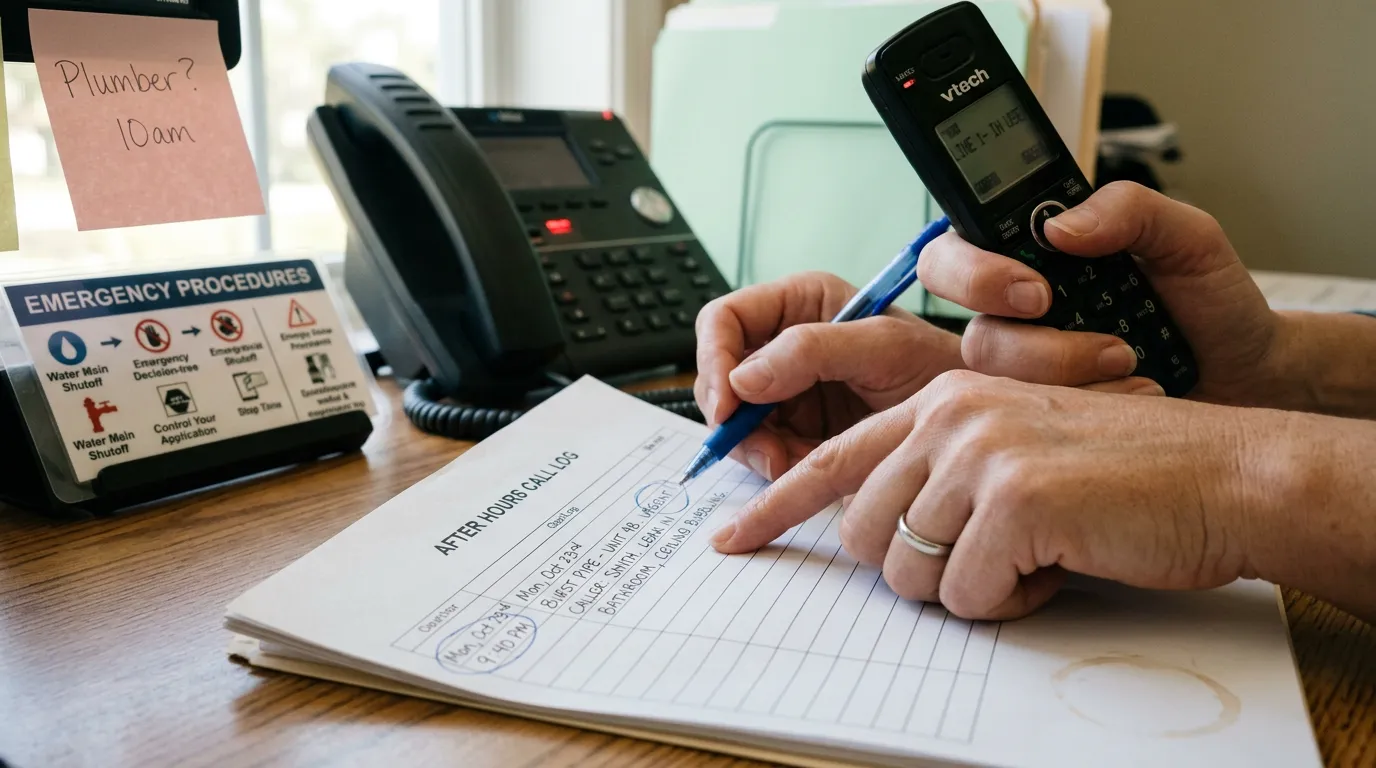
A burst pipe at 9:40pm shouldn't turn into a board complaint. Here's how HOA boards pick, configure, and audit an after-hours answering service.

10DLC Compliance vs Toll-Free Texting: An HOA Buyer's Playbook
HOA texts bouncing as spam? Learn how 10DLC compliance and toll-free texting differ so your community picks the right path fast.