Who Is My HOA? How to Find Your Association in Texas
Not sure who your HOA is? Here's how Texas homeowners can identify their association using closing documents, the state management certificate database and county records.
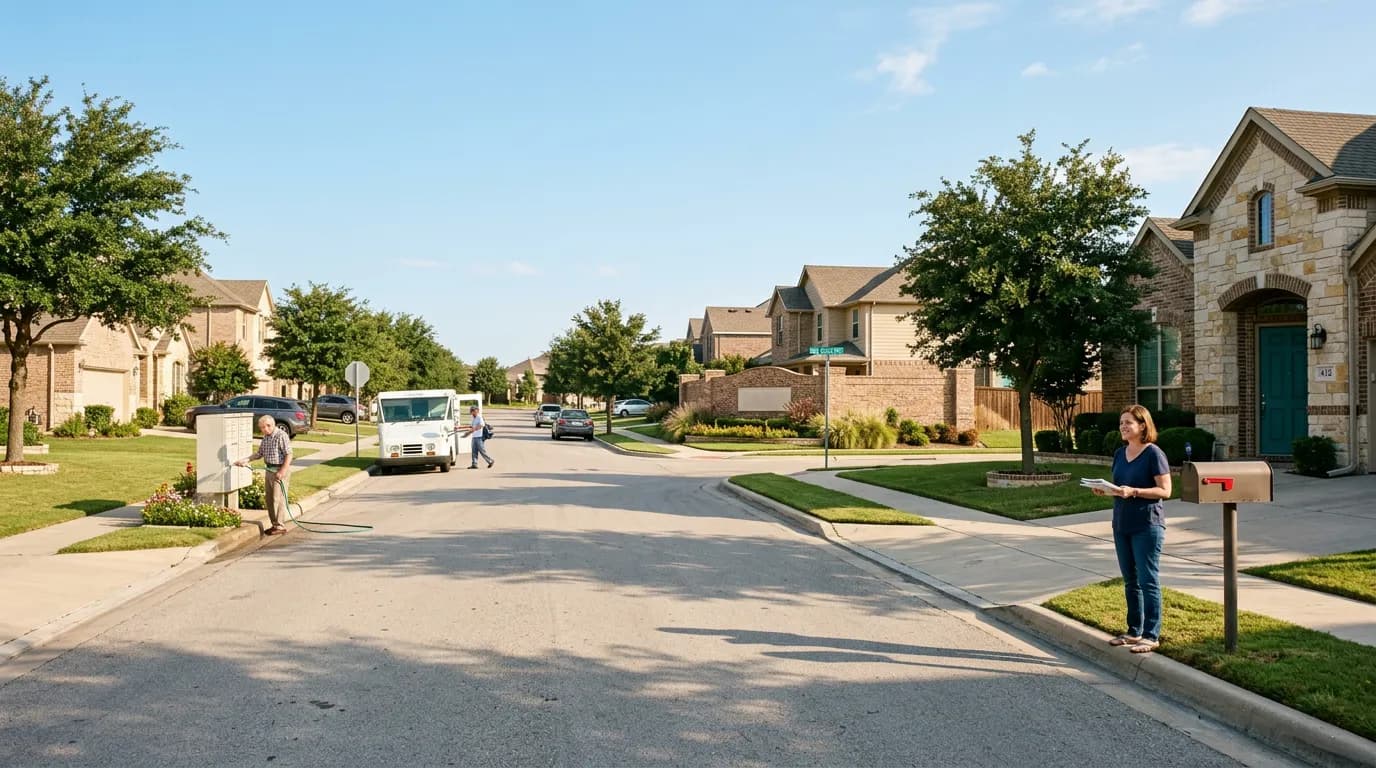
You just moved in, or you've lived here for years and never had a reason to ask. Now there's a letter about your trash cans, a question about the pool, or a fence you want to build, and you realize you don't actually know who your HOA is. You're not the only one asking "who is my HOA?"
The good news: in Texas, there are public records built to answer that question. Here's how to identify your association, step by step.
First, do you have an HOA at all?
Not every Texas neighborhood has a mandatory association. Under Property Code §209.002, the Texas Residential Property Owners Protection Act covers residential subdivisions whose recorded restrictions require membership in a property owners' association that can impose regular or special assessments. If you pay regular dues that you're required to pay, you very likely have one.
The name doesn't matter much. Section 209.003(c) says the chapter applies whether the group calls itself a "homeowners' association," a "community association" or something similar.
One important exception: Chapter 209 does not apply to condominiums (§209.003(d)). Condo owners have a condominium association instead, and it's governed by separate condominium statutes. The steps below still work for condos, with one difference noted in Step 2.
Step 1: Check the paperwork you already have
Start with what's in your drawer or inbox:
- Your dues statement. The name on the bill is often the association or its management company.
- Your closing documents. Look for a resale certificate. In a Texas subdivision with an association, an owner, buyer or title company can request one, and the association must deliver it (§207.003(a)). Under §207.003(b)(14), the certificate must include the name, mailing address and telephone number of the association's managing agent, if it has one.
- Your deed and title policy. These often reference the recorded restrictions for your subdivision, which name the association.
- Signs and mailers. Entrance monuments, pool signs and newsletters often show the association or manager's name.
Step 2: Look up the management certificate
This is the most reliable step. Under §209.004(a), a property owners' association must record a management certificate in each county where any part of the subdivision sits. The certificate must state:
- The name of the subdivision and the name of the association
- The recording data for the subdivision and for the declaration and its amendments
- The association's name and mailing address
- The name, mailing address, telephone number and email address of the person managing the association or its designated representative
- The website address where the association's dedicatory instruments are available, if it's required to have one
- The amount and description of any fees the association charges relating to a property transfer
You can find it two ways:
- Online, through the state. Under §209.004(b-1), the association must file the certificate electronically with the Texas Real Estate Commission within seven days of recording it, and the commission collects it to make the data accessible to the public through a website. Search the state's HOA site at hoa.texas.gov by subdivision or association name.
- At the county. The county clerk records the certificate in the real property records and indexes it as a "Property Owners' Association Management Certificate" (§209.004(a-1)). Search your county clerk's real property records using that title or your subdivision name.
For condos, the rule is in §82.116. A condominium association must record a similar management certificate, file it with the Texas Real Estate Commission, and the county indexes it as a "Condominium Association Management Certificate."
When information changes, the association must record an amended certificate within 30 days after it has notice of the change (§209.004(b)). If you find more than one filing, the most recent is usually the one to use.
Step 3: Find the recorded governing documents
Once you know the association's name, you can find its rules. Under §202.006, an association must file all its dedicatory instruments in the real property records of each county where the property is located, and a dedicatory instrument has no effect until it's filed. That means your declaration, bylaws and properly adopted rules should be searchable at the county clerk.
Many associations also post them online. Under §207.006, an association with at least 60 lots, or one that has contracted with a management company, must make its current recorded dedicatory instruments available on a website that members can access.
What if you find more than one association?
Some neighborhoods have more than one association, for example a larger community-wide association and a smaller one for a section or village. Each one that is required to file should have its own management certificate. Check each certificate's subdivision name and recording data against your own deed or closing documents to see which apply to your home.
Now that you know who it is, here's how to reach them
Finding your association is half the job. For the best way to call, write, or make a formal request, and what to do if nobody answers, read our guide on how to contact your HOA.
One practical tip: keep the mailing address from the latest management certificate handy. Some formal requests under Texas law, like a written request to inspect the association's books and records, go by certified mail to the address on the most current management certificate (§209.005(e)).
This post is general information, not legal advice. For a specific dispute, talk to a Texas attorney.
For board members
If residents can't tell who you are, they can't reach you, and the questions pile up in group texts and neighborhood apps. Keeping your management certificate current is the legal side. The practical side is one association phone number that residents can find and that someone actually answers.
QuorumVoice is a phone system and AI answering service for HOA boards and property managers. You can keep the number residents already know (we port it) or get a new local one. Every call, text, email and voicemail lands in one shared inbox, filed to the resident. Quill, the AI answering service, answers from the documents and rules you give it, takes messages, and transfers to an available board member. Quill Concierge is on Pro and Portfolio. Promises are tracked until they're kept, so a callback doesn't get lost when the board changes.
Greater Houston communities can apply for one of ten Founding Communities seats, with ninety days on Pro free and hands-on setup.
Written by

Derrick Threatt is an AI Automation Engineer and marketing operations leader who builds AI-driven systems, automations, and data workflows to improve revenue, operations, and team productivity.
View all posts →Keep reading.
QuorumVoice for HOA boards
One board number, every resident call on record, and Quill after hours.
See the page →QuorumVoice vs Quo
A sourced side-by-side of Quo and QuorumVoice: channels, AI and pricing.
Read the comparison →QuorumVoice vs Smith.ai
A sourced side-by-side of Smith.ai and QuorumVoice: channels, AI and pricing.
Read the comparison →
AI Answering Service for Business: How Quill Works
Most AI answering services just take messages. Quill answers, converses, and logs every call, text, and email to one contact timeline.
Can My HOA Tow My Car in Texas? What the Towing Law Says
Can your HOA tow your car? Here's what the Texas Towing and Booting Act says about HOA parking areas, required tow-away signs, notice rules and your right to a hearing.
HOA Fence Rules in Texas: What Your HOA Can and Can't Require
Planning a fence in a Texas HOA? Here's what your governing documents usually cover, what the Texas Property Code says about perimeter and pool fences, and how to get approval or appeal a denial.