AI Answering Service Cost in 2025: What HOA Boards and Property Managers Actually Pay
AI answering service cost ranges from $30 to $500 monthly. See what HOA boards and property managers actually pay across flat-rate, usage-based, and hybrid plans.

An AI answering service typically costs between $30 and $500 a month, depending on call volume, whether pricing is flat-rate or usage-based, and how much the platform does beyond picking up the phone. For an HOA board or a small property management office, the number that matters isn't the cheapest sticker price — it's which pricing model survives an annual meeting, a burst pipe during a holiday weekend, or the week before assessment deadlines when every homeowner calls at once.
This guide breaks down what the leading AI answering services actually charge, how the three common pricing structures work, and why call-volume patterns specific to community associations and property managers should drive the decision more than a generic per-minute rate. We also cover what an AI receptionist does not replace, so you can budget for it as a communications tool rather than expect it to run your HOA.
How much does an AI answering service cost per month for a small HOA or property management company?
Most small HOAs and property management offices pay somewhere between $100 and $400 a month for an AI answering service, depending on call volume and features like SMS logging or multi-line support. Usage-based plans can run cheaper in quiet months but spike sharply during annual meetings, storm season, or assessment deadlines when call volume triples.
The wide range exists because "AI answering service" covers everything from a basic voicemail-to-text bot to a full virtual receptionist that answers in a human-sounding voice, transfers emergencies to an on-call manager, and logs the conversation to a resident record. An HOA with one 200-unit community and predictable call patterns will pay less than a management company juggling calls for a dozen associations with different bylaws, vendors, and after-hours escalation rules.
What Leading AI Answering Services Charge in 2025
Pricing pages change often, so treat the figures below as approximate starting points rather than quotes — always confirm current pricing directly with the vendor before signing. What's useful here is the pattern: pricing model matters more than the headline number, especially once your call volume becomes seasonal.
| Provider | Pricing Model | Approximate Starting Price | Best Fit |
|---|---|---|---|
| Allo | Flat monthly, tiered by call volume | Roughly $30–$100/mo entry tier | General SMB AI receptionist, low call volume |
| Smith.ai | Hybrid (base fee plus per-call or per-minute overage) | Roughly $285+/mo | Law firms and professional services wanting live agents plus AI |
| Ruby Receptionists | Usage-based (receptionist minutes) | Roughly $300+/mo | Professional offices with moderate, steady call volume |
| AnswerConnect | Usage-based, scales with minutes | Roughly $60–$90/mo entry, rising with volume | Small businesses with light call volume |
| PATLive | Usage-based | Roughly $60–$90/mo entry | Small businesses testing live/AI answering |
| Abby Connect | Usage-based, minute blocks | Roughly $300+/mo | Law, dental, and client-services firms |
| QuorumVoice | Flat monthly, unlimited-call AI receptionist plus communications logging | Roughly $100–$250/mo depending on lines and communities | HOA boards, community managers, small property management offices |
Notice that flat-monthly and usage-based providers sit at both the low and high end of the range — the model itself doesn't determine whether it's cheap. It determines how predictable your bill stays when your call volume doubles for two weeks a year.
Flat Monthly, Usage-Based, or Hybrid: The Three AI Answering Service Pricing Models
Nearly every AI answering service on the market prices itself one of three ways:
- Flat monthly (unlimited or high-cap): One price covers all calls up to a generous ceiling, or truly unlimited calls. You know your bill in January and in July.
- Usage-based (per minute or per call): You pay a base rate plus a charge for every minute or call beyond an included allotment. Cheap when volume is low, expensive when it spikes.
- Hybrid: A base subscription fee that includes a set number of minutes or calls, with overage billed per minute once you exceed it. This is the most common structure among live answering services and several AI providers that blend human backup with automation.
For a business with steady, predictable call volume — a dental office with regular hours, say — usage-based pricing can be the cheaper option because it never pays for capacity it doesn't use. For an HOA board, that same math works against you.
Is a flat-rate unlimited plan or a per-minute plan cheaper for HOAs with unpredictable call volume?
Flat-rate unlimited plans are almost always cheaper and more predictable for HOAs, because call volume is not steady — it spikes hard around annual meetings, assessment due dates, and storm or utility outages. A per-minute plan that looks cheap in a quiet month can cost two or three times as much during a two-week spike.
Think about the calendar of a typical community association. Most months bring routine calls — gate codes, amenity reservations, a barking-dog complaint. Then a special assessment notice goes out, or a hurricane knocks out power to half the community, and the phone rings nonstop for a week. A per-minute or per-call plan bills every one of those calls at the overage rate, and boards often don't find out until the invoice arrives. A flat-rate plan absorbs that spike inside a price you already budgeted for, which matters when the board treasurer has to explain the communications line item at the next meeting.
This is also why unlimited-call AI answering tends to outperform usage-based live answering for community associations on a pure cost basis, even when the live service's advertised per-minute rate looks competitive on paper. Our practical comparison of human versus AI virtual receptionists for HOA boards walks through this trade-off in more detail, including where a live agent still earns its keep.
AI Answering Service vs. Traditional Live Answering Service Cost
Traditional live answering services generally cost more per minute than AI answering services because you're paying for a person's time on every call, not just the technology behind it. Hybrid live-plus-AI services split the difference, using AI to triage routine calls and routing complex or emotional calls — an angry homeowner, a genuine emergency — to a human agent.
Live answering pricing has historically run on a per-minute model, often somewhere between $1 and $2 per minute once you exceed your plan's included minutes, though exact rates vary by provider and contract length. AI answering services, because they don't pay a human wage per call, can offer flat-rate unlimited plans at a fraction of that per-minute cost — which is exactly why flat AI pricing tends to beat live-agent pricing for HOAs with spiky call patterns.
The trade-off isn't just cost, though. A live agent can read tone and improvise in ways an AI receptionist still can't fully match, especially in a distressed or ambiguous call. The right question isn't "AI or human" in the abstract — it's which calls in your specific mix actually need a human, and whether an AI receptionist with good escalation logic can route those calls to one reliably. Our guide to the best property management answering services, including AI-first options, breaks down how different providers handle that routing decision.
What does an AI answering service actually do — and what does it not replace?
An AI answering service answers calls, greets residents by name when it's connected to your contact list, answers common questions, takes messages, and routes urgent calls to a live person. It does not replace HOA management software: it does not track violations, run accounting or dues collection, store governing documents, or manage vendor contracts.
This distinction matters more than most pricing pages let on. An AI receptionist is a communications layer that sits in front of your phone line — it makes sure calls get answered, logged, and routed correctly. It is not a substitute for the platform where your board tracks architectural review requests, assessment ledgers, or covenant violation history. The two work side by side: the AI answering service handles the conversation, and your management software handles the record-keeping that requires ongoing case management rather than a timestamped log.
If you're evaluating tools for a high-call-volume office, it's worth reading how these categories complement each other before assuming one replaces the other — see our overview of HOA management software built for high call volume offices.
How does an AI answering service handle after-hours maintenance emergencies for a community association?
A well-configured AI answering service asks a homeowner a short set of triage questions — is there active water, fire, or a safety hazard — and if the answers indicate a genuine emergency, it transfers the call live to an on-call manager or vendor and sends a simultaneous text alert. Non-urgent requests get logged as a ticket for the next business day.
The design challenge is getting the triage script right. Too aggressive, and every maintenance call gets escalated at 2 a.m., burning out your on-call manager. Too passive, and a genuine flooded unit sits in a voicemail queue until morning. This is where the difference between a basic voicemail bot and a real AI receptionist shows up: the good ones let you define escalation rules per community — a burst pipe always transfers live, a broken dishwasher always waits — and every call, whether escalated or not, gets a transcript and timestamp attached to that homeowner's record. If a board ever needs to show when a call came in and what was said, that record is the evidence. Our roundup of AI phone systems for overwhelmed HOA and property managers compares how different platforms configure this kind of after-hours triage.
Do AI answering services record and transcribe calls, and what are the legal considerations?
Most AI answering services record and transcribe calls by default, since transcription is how the AI understands and logs the conversation. The legal consideration is consent: some states require only one party to consent to a recorded call, while others require all parties to consent, so the service needs a compliant disclosure built into the call flow.
Call recording consent laws vary meaningfully by state — a handful require two-party consent, meaning the caller has to be notified and, in some interpretations, agree before the recording continues. Justia maintains a 50-state survey of phone call recording laws that's worth reviewing before you assume your vendor's default disclosure covers you in every state you operate in. Ask your vendor directly: how is consent disclosed, is it configurable by state, and what's the data retention period for transcripts and audio? For a board, retention policy is as important as consent — you want records kept long enough to resolve a dispute, but you should know exactly how long and where they live. If your association also texts residents, it's worth pairing this with an understanding of texting compliance; our 10DLC compliance guide for HOA and property manager texting covers the parallel rules for SMS.
What should I look for in an AI answering service if I manage multiple HOA communities?
Look for per-community routing (so each association's calls greet callers by community name and follow that community's own rules), a shared but filterable call log across all properties, flat-rate pricing that doesn't punish you for combined call volume across communities, and the ability to hand off calls to different on-call managers or vendors by property.
Managing several associations on one phone number, or several numbers on one platform, creates a specific failure mode: a homeowner from Community A calls, and the system either can't tell which community they belong to or greets them with the wrong information. Ask any vendor how they handle multi-community routing before you sign, and ask to see the call log filtered by property rather than just by date. If you're comparing dedicated multi-line tools, our review of JustCall alternatives for HOA and property managers covers several platforms built around exactly this multi-line, multi-property structure.
Key Factors Beyond Price When Choosing an AI Answering Service
Price gets the attention, but these factors tend to determine whether the service actually saves a board or management office time and disputes:
- Call logging and audit trail: Does every call, voicemail, and text get transcribed and attached to a per-resident record, or does it live in a separate inbox that nobody checks?
- Escalation logic: Can you define what counts as an emergency per community, and does the system actually transfer live or just take a message?
- Works with what you already use: Does it run alongside your existing HOA management software, or does the vendor try to sell you a full replacement platform you don't need?
- Data retention and consent compliance: How long are recordings kept, and is call-recording consent handled correctly for your state?
- Multi-line and multi-community support: If you manage more than one property, can the system route and report on each separately?
- Contract flexibility: Annual contracts with usage overage clauses can turn a "cheap" plan into an expensive one during a spike month.
The generic advice on most comparison sites stops at "reliability" and "customer support." For an HOA board, the factor that actually prevents disputes is the audit trail — being able to show a homeowner, in writing, exactly when they called, what they said, and what the board's representative committed to. Our piece on how HOA property managers handle high-volume homeowner communication goes deeper on why that record matters when a disagreement escalates to a formal complaint.
Questions to Ask Any AI Answering Service Vendor Before You Sign
A short list of questions separates a good fit from a bad surprise on your third invoice:
- What is your state-by-state call recording consent policy, and is the disclosure customizable?
- How long do you retain call recordings, transcripts, and SMS logs, and can we export them?
- What exactly triggers a live transfer versus a logged message, and can we set that per community or property?
- Is pricing truly flat, or is there an overage clause once we exceed a call or minute cap?
- Does the platform work with our existing accounting, violations, or document software, or is it a standalone communications tool?
- What happens to our call history and contact records if we cancel?
Any vendor unwilling to answer these clearly, in writing, before you sign a contract is telling you something about how they'll handle support requests later.
Where QuorumVoice Fits in This Picture
In the interest of transparency: QuorumVoice is our own product, and it's fair to weigh that as you read this. QuorumVoice is a VoIP business phone line with an AI receptionist, Quill, built on flat-rate pricing rather than per-minute billing, specifically because seasonal call spikes are so common among the HOA boards, community managers, and small property management companies who use it. Every call, voicemail, text, and email gets transcribed and logged to one timeline per contact, so a board or manager can see the full communication history with a homeowner in one place rather than piecing it together across a phone log, an inbox, and a voicemail box.
QuorumVoice isn't HOA-specific software, and it isn't a replacement for whatever platform your association already uses to track violations, run accounting, or store governing documents — it's the communications layer that sits alongside those tools. If your call pattern looks like the one described above — quiet months punctuated by sharp spikes around meetings, assessments, or storms — that's the profile it was built to fit. If your call volume is genuinely low and steady, a lighter usage-based tool from another provider on the comparison table above may cost you less.
Frequently Asked Questions
In most cases, yes. A part-time receptionist's wages, taxes, and benefits typically exceed the monthly cost of an AI answering service, even a fully featured one, though a human offers judgment and local familiarity an AI can't fully replicate. Many HOAs and small property managers use AI answering to cover after-hours and overflow calls while keeping a person on staff for daytime, in-person work.
Many AI answering platforms support multiple languages, but capability varies significantly by provider and by how the AI voice model handles accents and dialects. If your community has a meaningful non-English-speaking population, ask any vendor for a live multilingual demo before signing rather than relying on a features page.
Some providers bundle SMS into their base plan, while others charge per message or require a separate texting add-on, especially once 10DLC registration is involved for business text messaging. Confirm whether text logging is included in your quoted price, since it's often listed as a separate line item.
Reputable providers build in a fallback: if the AI can't resolve or correctly triage a call, it transfers to a live agent or your designated on-call contact rather than ending the call. Ask specifically what the fallback path looks like and test it yourself before your community relies on it during a real emergency.
Most AI answering providers, including flat-rate platforms like QuorumVoice, let you manage multiple communities or properties under one account with separate lines, routing rules, and call logs per property. Confirm this before signing if you manage more than one association, since some usage-based providers price each line as a separate contract.
On usage-based plans, cost rises roughly in step with call minutes, so a growing HOA portfolio or a busier season directly increases the bill. On flat-rate plans, cost typically stays fixed until you exceed a much higher ceiling or add lines for new communities, which is why growing management companies often find flat pricing easier to budget against.
Pricing tables are a useful starting point, but the real cost of an AI answering service only shows up once you map it against your actual call pattern — the quiet months and the spike weeks both. If you manage an HOA, a handful of communities, or a small property management office and want to see how flat-rate AI answering and a single logged timeline per resident would work against your own call volume, you can look at QuorumVoice's pricing and setup details or compare it against the other providers in the table above before making a call.
Written by

Derrick Threatt is an AI Automation Engineer and marketing operations leader who builds AI-driven systems, automations, and data workflows to improve revenue, operations, and team productivity.
View all posts →Latest from the blog. Keep reading.
View all →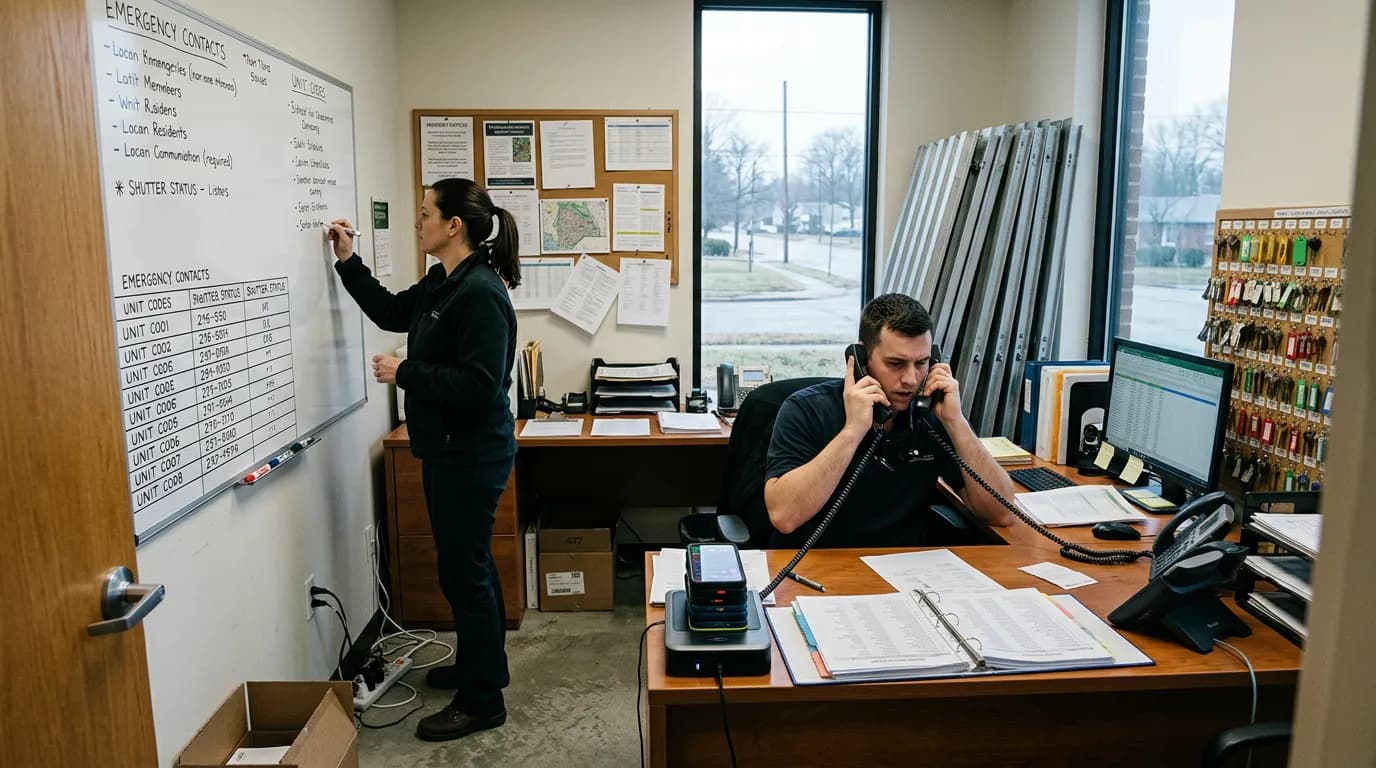
Best Phone Systems for Small Business in 2025: Honest Picks for Teams That Can't Afford to Miss a Call
HOA and property management offices need more than sales-team phone tools. See how Allo, OpenPhone, Dialpad, Nextiva, and QuorumVoice handle resident calls.

40 HOA & Property Management Text Message Templates (Copy-Paste Ready)
40 copy-paste HOA and property management text templates for missed calls, maintenance updates, dues reminders, and after-hours compliance.
SMS Opt-In Examples & Compliant Templates for HOAs and Property Managers
Copy-paste SMS opt-in examples and compliant templates built for HOAs and property managers, covering 10DLC rules, confirmation texts, and consent tracking.